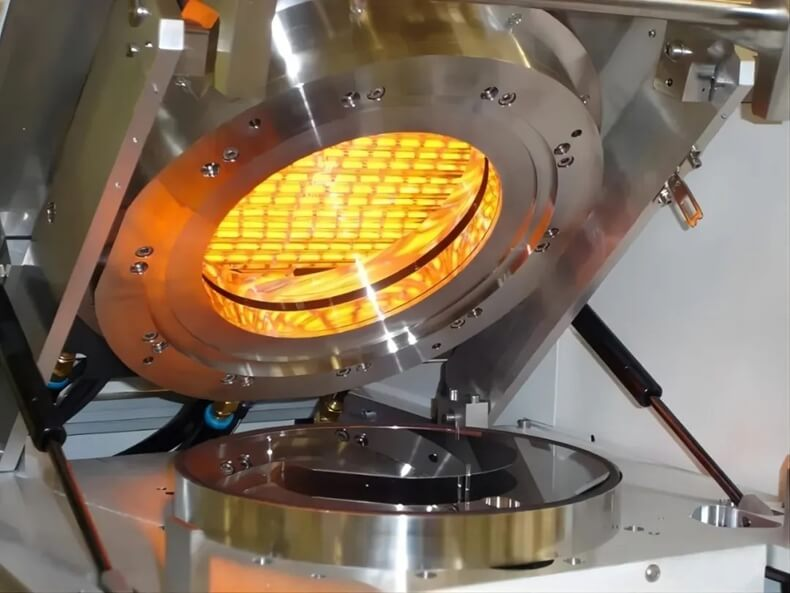
Out on the fab floor, a 300mm wafer is packed with thousands of die, and the thermal budget is sacred. A 2°C drift during photoresist soft bake or spike anneal can bake a defect right into the pattern, throw CD uniformity off spec, and wipe out a whole lot of good die. We lean on rapid thermal processing (RTP) lamp systems to keep that from happening, with repeatable, wafer-level temperature control. What actually matters under the hood We run short-wave halogen lamps in a closed-loop pyrometry setup. That gives us millisecond response and tight temperature uniformity across the wafer—typically ±0.1°C. Quartz components and low-outgassing fixtures keep particle counts down, which is what you need for cleanroom classes 1–100. The payoff is predictable energy coupling into the stack, whether you’re doing photoresist hard bake or spike anneal, with minimal thermal overshoot. The process window opens up, and cycle-to-cycle repeatability gets better. Why this plays well in lithography tracks and RTP cells is simple: the lamp holds setpoint stability lot after lot. That means fewer scrap wafers and less rework. Clean, dry heating keeps the photoresist profile intact, drives down defects, and keeps critical dimensions on target. Energy use drops because the lamp heats the target directly and recovers fast. Reliability is built around 24/7 operation with planned maintenance, not surprise downtime. A few realities to keep in mind: the lamp is sensitive to optical alignment, and pyrometers plus reflector geometry need periodic calibration. Integration has to match the tool’s chamber footprint, exhaust, and gas chemistry. We work with the tool OEM and your process recipes to tune power profiles and make sure everything plays together. Plan for a short commissioning window, and keep a spare lamp strategy on the shelf—uptime is too expensive to leave to chance.