Why we use IR curing for lead-free semiconductors
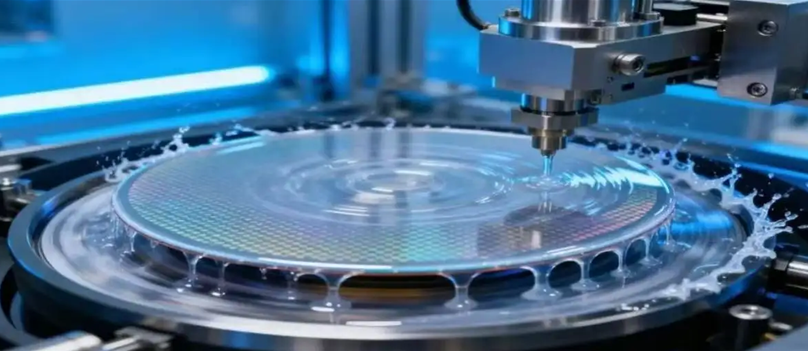
When you’re fabricating MEMS sensors, the last thing you want is a contaminated substrate. You need the wafer dry, and you need it clean. That’s why we lean on infrared (IR) curing. It gets rid of moisture and solvents without needing those messy chemical additives or lead-based catalysts. It’s just direct energy doing the heavy lifting. How the physics actually works Think about a standard convection oven. It heats the air, and the air heats the part. It’s slow. IR is different. The lamps go straight for the water molecules or solvents sitting on the wafer. We stick with short-wave IR for MEMS. It punches through the surface layers fast, which triggers a quick evaporation. The ramp-up is nearly instant. This is huge because it stops “skinning”—that annoying thing where the top dries too quickly and traps solvents underneath. Playing by the “Green” rules The industry is moving toward lead-free and green footprints, and for good reason. Old-school thermal curing often needs heavy-metal catalysts just to get the temperature low enough to work. With IR, we just skip that. We use light energy to handle the evaporation and chemical cross-linking. No VOCs coming off the heater, no toxic additives. It just fits right into a clean-room setup without causing a headache. The trade-offs you should know about Now, high-intensity IR heaters pack a punch. The energy density is massive, which is great for getting parts through the line faster. But you have to watch your thermal gradient. If your wafer is on the thinner side, you might warp the silicon if the IR intensity isn’t mapped across the surface perfectly. We’ve found that using a pulsed power supply is the way to go. It keeps the substrate temperature within a tight 5°C window. One more thing: don’t forget your cooling fans and shielding. Radiant heat leaks. If your housing isn’t insulated well, your clean-room temperature will spike, and your HVAC alarms will start screaming. Just make sure your facility’s cooling can keep up with the power you’re pumping in.