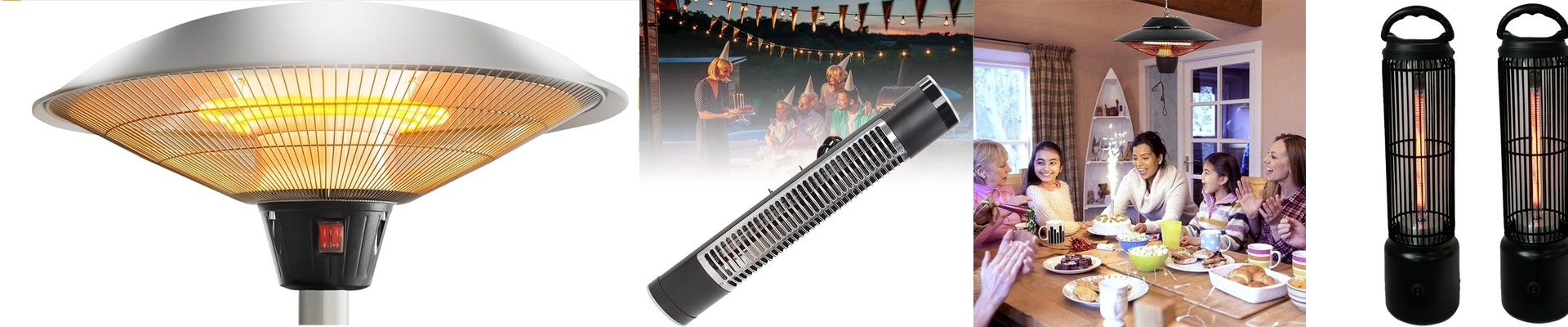
Keeping the Rain Out of Your Patio Heater
If you’ve ever run an outdoor bar or a patio, you know the drill. Humidity, sudden rain showers, and that annoying morning dew are basically trying to kill your equipment every single day. Most heaters give up the ghost because water finds a way into the electrical guts. We spent a lot of time figuring out how to stop that.
Dealing with Splashes and Fog
Here’s the thing about water: it loves to find the one tiny gap in your housing and head straight for the electrical terminals. That’s a recipe for a short circuit. To stop that, we use a housing that actually keeps the liquid where it belongs—outside. But it’s not just about the rain. We also had to tackle the fog. You’ve seen it happen—that cloudy film that builds up on the lens. It looks bad, sure, but it’s actually dangerous for the heater. When tiny water droplets sit on a scorching hot infrared tube, they create “cold spots.” The glass expands and contracts unevenly, andcrack. Your expensive heating element is gone. We fixed this by managing the heat flow so condensation doesn’t even get a chance to start.
The Heavy-Duty Stuff
We didn’t want to use the cheap, flimsy plastics you see in big-box stores. Those things warp the second the heater hits full blast. Instead, we went with heat-stabilized polymers and alloys that don’t rust when the weather turns nasty. We also looked at the wiring. Most wires get brittle after a few winters of freezing and thawing, then they just snap. Ours are spec’d for the long haul. And if you look closely at the power intake, you’ll see these tight gaskets. They’re there for a reason. They stop wind-driven rain from migrating inside and frying your control board.
A Few Things to Keep in Mind
Now, there’s a trade-off. Because we added all these seals and reinforced materials, these units have some heft to them. They’re a bit bulkier and heavier than something you’d plug into a wall in your living room. When you’re setting yours up, just double-check your circuit breaker. These things have a bit of a surge when they first kick on. Also, be careful not to over-spec the voltage—you can actually burn out the element even if the housing is perfectly waterproof. Oh, and one last tip: keep the vents clear. If the air can’t move, those internal seals can overheat, and that defeats the whole purpose.