Stop Heating the Whole Room (And Your Technicians)
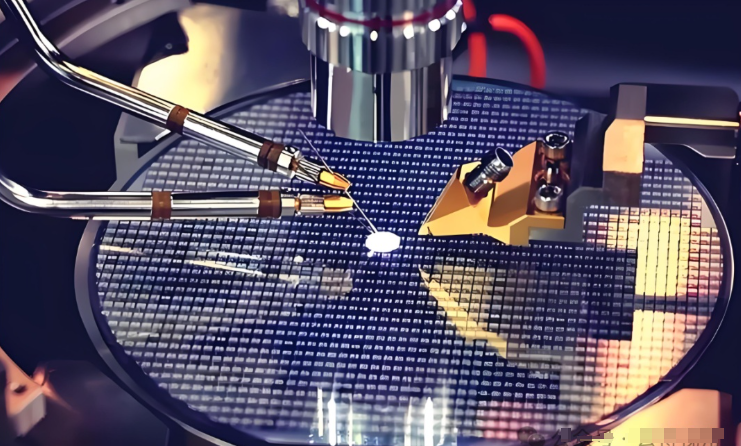
If you’ve ever worked with standard convection ovens in a semi-fab, you know the drill. You crank up the heat to get your substrate to the right temp, but the oven basically becomes a giant heat soak. The inner walls absorb everything. Before you know it, the entire chassis is scorching hot, you’re wasting a ton of power, and the equipment feels like a radiator. It’s a mess. We decided to fix this by ditching ambient heating and moving to directional infrared (IR) technology. How it actually works Think of it this way: convection heats the air, but IR is more like a flashlight. It sends electromagnetic radiation in a straight line. The air in between doesn’t really care; only the object that absorbs the wavelength gets hot. By “pointing” the heat directly at the wafer or component, the surrounding walls stay cool. This means your operators aren’t risking burns just by standing near the machine, and you don’t have to worry about the heat messing with nearby sensitive electronics. The trade-offs you need to know To get the kind of precision a clean room demands, we use short-wave quartz emitters. They pack a lot of punch into a small space. The ramp-up is fast. Like, really fast. And when you hit the switch, the heat stops instantly. But here’s the catch. Because these lamps concentrate so much energy into a narrow beam, you have to be careful with your setup. If your reflectors are slightly off, or if the material you’re heating doesn’t absorb the energy well, that heat bounces back. If it reflects straight back into the lamp housing, you’ll burn out your lamps way sooner than you should. Getting your reflectors spec’d correctly isn’t optional—it’s everything. Making it work in the real world The best part? Since the walls aren’t glowing red, you can stop relying on those massive, bulky insulation layers on the outside of the oven. You can wire the lamps into a PID controller to keep your temperature swings tight. Plus, it makes life a lot easier for your techs. They can load materials or run maintenance without feeling like they’re touching a stovetop. It’s just… safer. And a lot more efficient.