
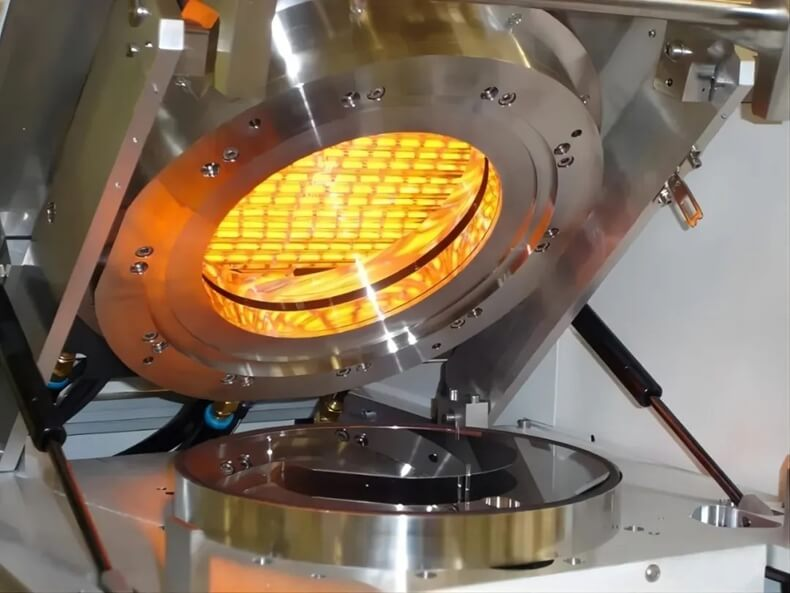
Why we’re swapping hot air for IR in semiconductor packaging
If you’re working in smart sensor processing, you know the biggest headache is usually the clock. Everything takes too long. That’s why so many of us are moving away from hot air circulation and leaning into infrared (IR) heating. It really comes down to how the heat gets there. Forced air is slow because it has to heat the air first, which then heats the part. IR just cuts out the middleman. It sends energy straight into the material. The waiting game Think about those big hot air ovens. They have this massive thermal inertia. You spend forever preheating the whole chamber and just… waiting for the air to settle. It’s frustrating. IR lamps? They’re hot in seconds. When we’re curing or drying sensor packaging, IR is a lifesaver because it actually penetrates the surface. You get heat deep inside the component almost instantly. No more sitting around for “soak time” while you hope the heat finally reaches the core. Saving space on the floor Plus, your gear gets smaller. You don’t need these giant, insulated boxes just to keep the air warm. We can set up IR zones to hit exactly where the sensor needs it without cooking the entire assembly. It’s a huge relief knowing you can get the packaging resin to the right temperature (that Tg point) without accidentally frying the sensitive silicon dies. The catch Now, IR isn’t a magic wand. There’s a trade-off. You lose that “blanket” of heat you get from a saturated air environment. If your parts have weird 3D shapes or deep pockets, you’ll run into “shadows” where the heat can’t reach. You have to be smart about where you place your lamps or use reflectors to bounce the energy into those dead spots. And you have to watch your conveyor speed. Like, really watch it. IR is intense. If the belt crawls too slowly, you’ll burn right through your substrate. But for high-volume lines? This is just how it’s done now if you want to actually move the needle on your cycle times.